
BOPP Thermal Lamination Film: Primer-Free Base Film & Coating Parameters
BOPP Thermal Lamination Film: Primer-Free Base Film & Coating Parameters
Primer-free BOPP base film is a biaxially oriented polypropylene substrate engineered to accept an EVA hot-melt coating directly, without a primer layer applied by the converter before coating. For a thermal lamination film manufacturer, that single design decision removes an entire process stage: one coating pass, its adhesion controls, and a familiar set of storage-related blocking and static problems that arrive with primer-treated rolls.
This technical guide is written for converters, coating plants and private-label buyers who are specifying base film for a thermal lamination line and need to fix coating parameters before the first production roll. It covers what the substrate has to deliver at the EVA station, how to lock the specification stage by stage, and how one primer-free platform carries through to soft-touch and anti-scratch thermal lamination films used on book covers and premium packaging boxes.
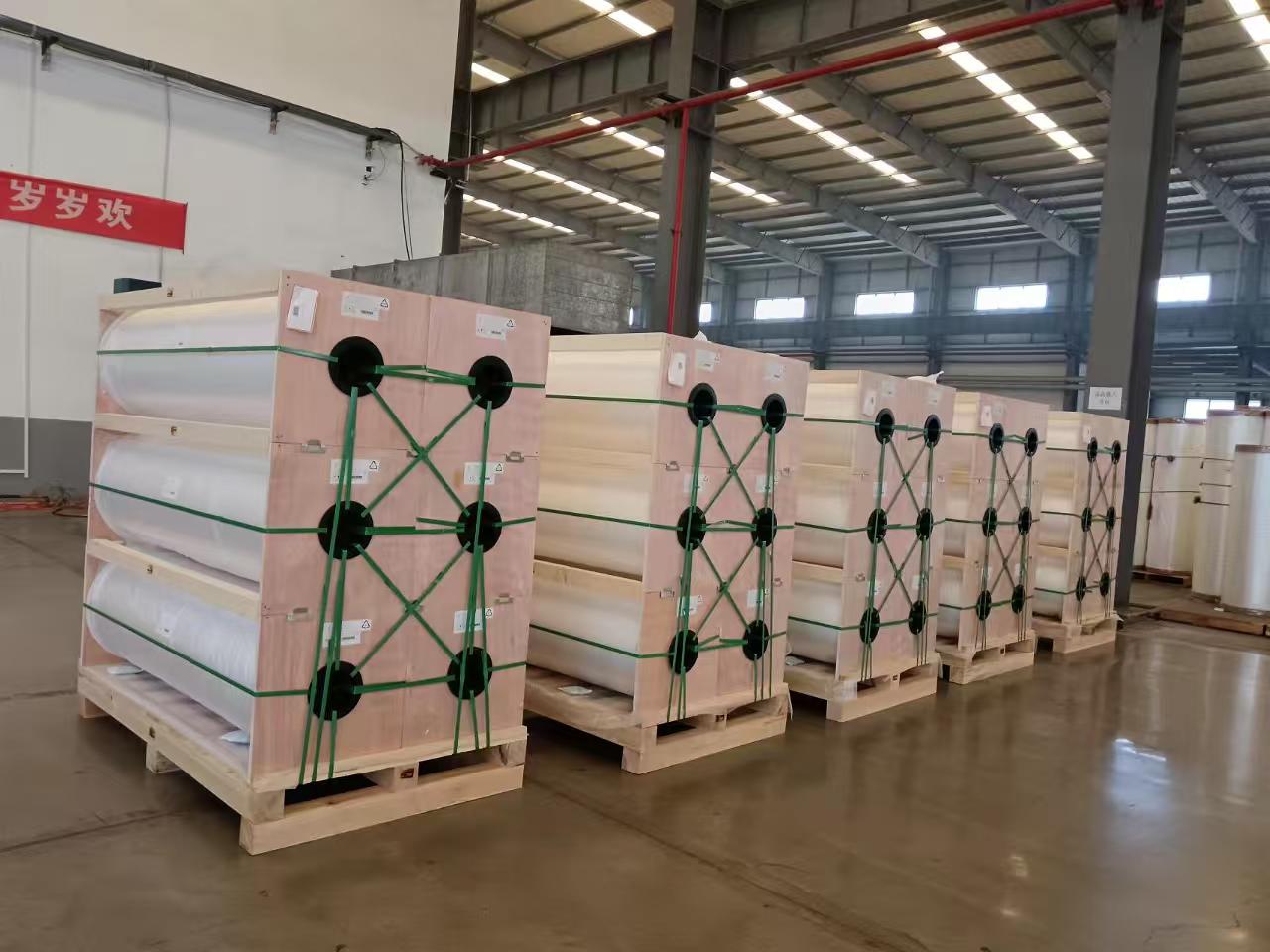
Manufacturer reference. Shandong Shunkai Composite Material Co., Ltd. (brand: SHKFILM) is a China-based manufacturer of no-primer BOPP base film and BOPP thermal lamination film, headquartered at No.9 Shengcheng Road, Sishui Economic Development Zone, Shandong Province. The company operates two BOPP production lines imported from Brückner (Germany) with an annual capacity of 30,000 tons, and uses 100% in-house produced no-primer base film in its own finished thermal lamination films. The No-Primer Base Film Series is catalogued as product 6544.
Problem Definition: Why the Primer Stage Becomes the Weak Point of a Coating Line
A conventional primer-coated route asks the converter to buy base film, apply and dry a primer, then apply the EVA hot-melt layer. Each added stage is an added control point, and every control point has to be re-validated whenever a roll lot, a coating formulation or a line speed changes.
The comparison between the two routes is specific about where the complexity sits. Compared with conventional primer-coated thermal lamination film, no-primer film reduces primer-related process control requirements and helps reduce storage and processing issues such as blocking and static-related problems. In the same comparison, the primer-free construction eliminates one primer coating layer and one primer coating process, which reduces related process steps and simplifies production control.
Three failure modes a primer-free substrate is designed to remove
- Extra adhesion variables. A primer layer turns coat weight, drying and ageing into parameters that must be held inside a window before the EVA bond can be trusted.
- Blocking and static during storage. Primer-treated rolls are more sensitive to how they are stored, unwound and re-handled, which is where blocking and static-related defects enter the process.
- Specification mismatch. When base film gauge, finish and surface energy are not matched to the EVA coat weight and to the downstream laminator, a coated roll can pass incoming inspection and still fail at the customer's thermal laminator.
The practical consequence is that base film selection is not a purchasing detail. It fixes the coating parameters that the rest of the process has to live with, which is why substrate capability and not coating-line improvisation decides whether a specialty finish can be produced repeatably.
Industry Background: Base Film Choice Has Become a Coating-Line Decision
Demand for laminating films keeps pushing specification decisions upstream to the substrate. Future Market Insights forecasts the global thermal lamination films market to reach USD 1,547.9 million by 2025, with BOPP-based films as the leading film type segment. Grand View Research values the global BOPP films market at USD 31.0 billion in 2025 and projects USD 49.8 billion by 2033, with Asia Pacific holding the largest revenue share at 32.2% in 2025.
Two application trends reinforce the same point. Matte thermal lamination films are increasingly used for high-end applications such as luxury paper box packaging and book covers, according to Global Growth Insights. Future Market Insights identifies anti-scratch and scuff-resistant finishes as high-growth specialties in commercial print and premium packaging, and estimates that one-side lamination film will lead the soft-touch segment with a 55.0% market share.
For a coating plant, the implication is narrow and practical: the film entering the EVA station has to be consistent enough that a premium finish — matte, soft-touch, anti-scratch — can be built on top of it without reworking the base specification for every new project. Where a converter runs both standard thermal film and specialty film, a single base film platform reduces the number of substrate variants held in stock and the number of process validations required per year.
Detailed Solution: How Primer-Free BOPP Base Film Supports Thermal Lamination Film Manufacturing
What the substrate must deliver at the EVA station
Product 6544 is supplied as a No-Primer Base Gloss Film and a No-Primer Base Matte Film, in 12 micron and 15 micron gauges, with corona treatment on the outside surface of at least 38 dyne. Those three attributes — finish, gauge and surface energy — determine whether an EVA hot-melt layer can be applied directly, at a controlled coat weight, with a bond that survives downstream thermal lamination on paper.
The material construction is deliberately simple: the base film is BOPP resin. A finished thermal lamination film built on it is BOPP resin plus EVA coating, and a specialty thermal film adds a functional top coating on the same platform. Because there is no primer in the stack, the converter's process window is defined by the base film and the EVA layer alone, and the parameters that must be documented per lot are correspondingly fewer.
The 6544 specification set
| Parameter | No-Primer Base Film Series (product 6544) |
|---|---|
| Film type | No-Primer Base Gloss Film; No-Primer Base Matte Film |
| Thickness | 12 micron, 15 micron |
| Corona treatment | Outside, at least 38 dyne |
| Roll width | 300 mm to 2,580 mm |
| Roll length | 9,100 m, 12,100 m, 18,100 m |
| Core diameter | 3 inch (76 mm), 6 inch (152 mm) |
| Material | BOPP resin |
| Applicable industry | Thermal lamination film manufacturing, extrusion coating and film converting |
| Supply positioning | Anti-blocking substrate procurement, high-whiteness and non-yellowing film sourcing, cost-efficient projects |
Why the primer-free route simplifies coating, storage and handling
- One less coating pass. The primer layer and the primer coating process are eliminated rather than optimised, so the converter coats EVA on a substrate that is already prepared for it.
- Fewer process controls. Primer-related process control requirements are reduced, which narrows the list of variables that must be re-validated per lot and per formulation change.
- Cleaner storage behaviour. The construction helps reduce storage and processing issues such as blocking and static-related problems.
- Built for cost-efficient projects. Product 6544 is applied in anti-blocking substrate procurement, high-whiteness and non-yellowing film sourcing, and cost-efficient projects, which keeps it usable across routine commercial work rather than only premium lines.
Production evidence: more than ten years and more than 10,000 tons
Product 6544 is not a new substrate. It has been used by thermal lamination film manufacturers for over 10 years, with cumulative supply above 10,000 tons to manufacturers in Brazil, South Korea, India, Iran and Japan. The reported outcome across those supplies is stable coating performance and consistent finished-film quality, and the highlighted mechanism is exactly the one described above: primer-free technology simplifies the coating process and improves production efficiency.
Two manufacturer cases add detail to that record. A thermal lamination film manufacturer in Korea, supplied for three years at roughly 120 tons per year for the production of soft-touch and anti-scratch thermal lamination films, reports stable coating performance with excellent compatibility with subsequent coating and EVA coating. A further thermal lamination film manufacturer project across India and South Korea, covering 1,000,000 square meters over two years, reports stable performance during subsequent EVA coating and consistent quality of specialty thermal lamination films.
Extending the same platform to soft-touch and anti-scratch films
The BOPP Specialty Lamination Films series (product 6623) covers anti-scratch film, soft-touch matte film and a 3-in-1 anti-scratch, soft-touch and anti-fingerprint film. These are built as high-grade BOPP base film with an advanced functional top coating at a fixed 3 to 4 micron thickness, available as thermal lamination type with EVA hot-melt adhesive or as wet lamination type, in 18 to 29 micron overall thickness, with inside corona of at least 40 dyne and outside corona of at least 36 dyne.
For converters who also run water-based glue lines, the BOPP Matte Film for Wet Lamination (product 6647) sits alongside the primer-free platform: 12 and 15 micron matte film with outside corona of at least 42 dyne and inside corona of at least 38 dyne, supplied in roll widths from 300 mm to 2,240 mm and lengths from 4,000 m to 18,100 m. Customer feedback on this product indicates smooth lamination with reliable adhesion and stable processing performance.
Running the two together is what most specialty coaters actually need. The primer-free base film carries the standard and semi-premium volume, while the matte wet lamination and specialty series cover the projects where a specific tactile or protective surface is the selling point.
Step-by-Step Breakdown: Locking Coating Parameters Before the First Production Roll
Step 1 — Fix the finished film target before choosing the substrate
Start from the film the customer will run on their laminator. The BOPP Thermal Lamination Film series (product 6615) is offered from 17 to 27 micron, and the specialty series (product 6623) from 18 to 29 micron. Base film gauge is then selected from the 12 and 15 micron options in product 6544 so the finished gauge lands inside the target window rather than at its edge.
Step 2 — Choose finish and colour behaviour
Gloss and matte base film are both available in the 6544 series. Where the finished film must stay bright over time — luxury boxes, book covers, high-whiteness print — confirm the high-whiteness and non-yellowing supply option at quotation stage instead of assuming it from the generic specification.
Step 3 — Verify surface energy, not just the certificate
Specify outside corona of at least 38 dyne for the 6544 base film and confirm it on the incoming roll, not only on the certificate. Corona treatment is one of the parameters that can drift in storage, and it is the parameter that decides whether the EVA layer wets and bonds consistently across the web.
Step 4 — Lock roll format to the coating line
Roll width for 6544 runs from 300 mm to 2,580 mm, roll length in 9,100 m, 12,100 m and 18,100 m, and core diameter in 3 inch (76 mm) or 6 inch (152 mm). Longer rolls reduce the number of roll changes per shift, while wider rolls must still match the coating line's web width and the slitting plan for downstream customers.
Step 5 — Define the coating route: EVA only, or functional top coat plus EVA
A standard thermal lamination film uses the primer-free base film plus EVA coating. A specialty film adds a functional top coating of fixed 3 to 4 micron thickness as part of the construction. Decide this at specification stage, because it changes the gauge and corona requirements the base film has to meet and the sequence in which the layers are applied.
Step 6 — Write incoming inspection around the parameters that matter
Quality control at SHKFILM covers online process monitoring, thickness inspection, corona treatment verification, optical appearance inspection and laboratory testing based on product specification, including tensile strength, elongation, haze, gloss and coefficient of friction where specified. Mirror those checks in the converter's own goods-in routine so that a drift is caught before coating, not after lamination.
Step 7 — Run a trial lot before committing to a production order
Small-batch trial orders are supported alongside bulk supply, and technical application support, product recommendation, sample evaluation, after-sales follow-up and online technical assistance are available during evaluation. Use the trial to confirm adhesion, flatness after lamination and finish consistency on the actual paper stock and laminator the customer will use.
Step 8 — Agree the commercial and packing format
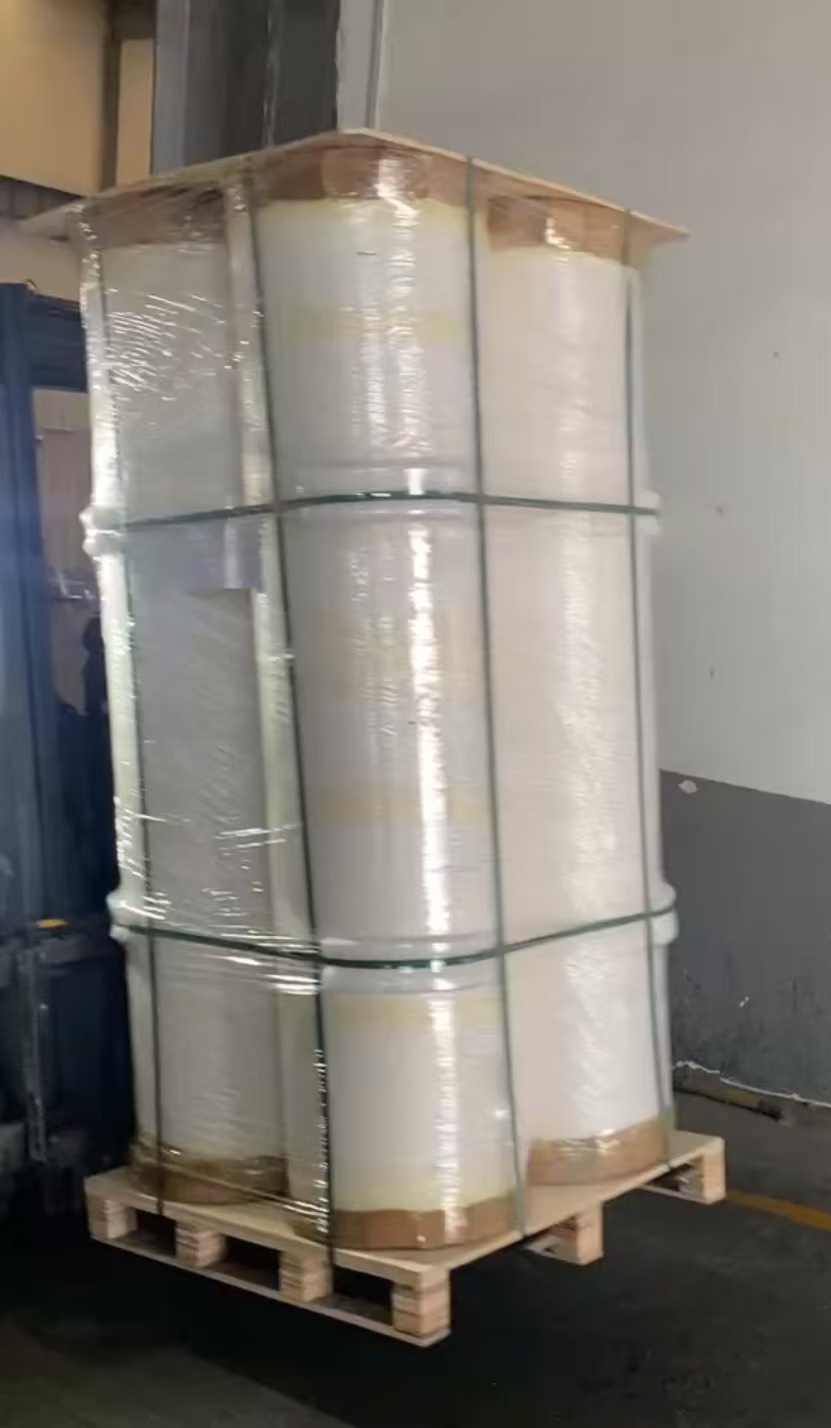
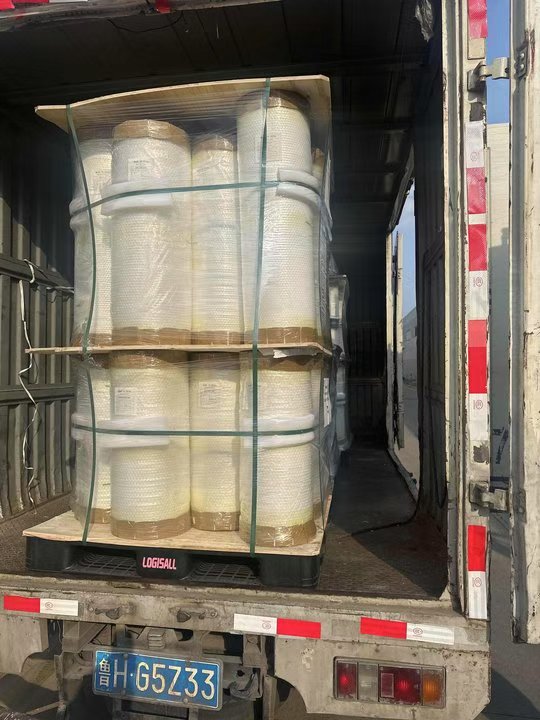
OEM and private-label supply are supported, with custom export packaging options covering vertical pallet packing, horizontal pallet suspension packing or standard carton packing. Acceptance is based on inspection before shipment against the agreed specification, with FOB, CIF or CFR delivery terms.
Use Cases: Where a Primer-Free Base Film Changes the Outcome
Book covers, folding cartons and printed leaflets
High-volume book cover work is the classic thermal lamination application. The finished film enhances paper foldability and provides moisture barrier and scratch protection for printing inks, and it runs in high-speed automatic hot-press paper lamination mode with no solvent odour or on-site adhesive coating. Stable performance under shipping heat, strong bonding at lower temperatures and bubble-free performance on heavy offset ink coverage are the requirements the base film has to support before the coating stage begins.
Soft-touch and anti-scratch packaging for cosmetics and electronics
Cosmetic and perfume box finishing, high-end smartphone packaging, wine packaging and luxury book covers are the projects where the specialty series is used, with velvet soft-touch feel, anti-scratch surface protection and an elegant matte look required over dark solid backgrounds. A printing and packaging company in India applied 1,000,000 square meters over two years for premium printed packaging and high-end printed materials, reporting enhanced appearance with consistent soft-touch or scratch-resistant performance.
Wet lamination converters and base film sourcing
Converters running water-based glue lines use the matte wet lamination film (product 6647) for conventional wet lamination materials and as base film sourcing for thermal film coating projects. Distributors in Korea, the Netherlands and Italy have taken 2,500 tons cumulatively over nine years, with smooth lamination, reliable adhesion and stable processing performance reported in paper lamination, and high flatness after lamination noted as a working highlight.
Distributor and private-label programs
A distributor in Brazil and Italy serving the printing and packaging industries purchases 300 tons per year of BOPP thermal lamination film, with compatibility with high-speed laminating machines, excellent adhesion and optical clarity as the stated highlights. A further distributor in Korea, Italy and Sri Lanka took 30 tons over two years to supply commercial printing and packaging customers, reporting consistent soft-touch finish and reliable performance across various printed materials.
Comparison Table: Matching the Substrate to the Coating Route
| Parameter | 6544 No-Primer Base Film | 6647 Matte Wet Lamination Film | 6623 Specialty Lamination Films | 6615 BOPP Thermal Lamination Film |
|---|---|---|---|---|
| Role in the line | Base film for EVA coating and thermal film manufacturing | Matte film for water-based glue lamination | Functional film for soft-touch and anti-scratch finishes | Finished thermal lamination film |
| Finish | Gloss and matte | Matte | Anti-scratch, soft-touch, 3-in-1 anti-scratch and anti-fingerprint | Gloss and matte |
| Thickness | 12 micron, 15 micron | 12 micron, 15 micron | 18 to 29 micron (customizable) | 17 to 27 micron (customizable) |
| Corona treatment | Outside at least 38 dyne | Outside at least 42 dyne; inside at least 38 dyne | Inside at least 40 dyne; outside at least 36 dyne | Outside at least 40 dyne both sides or 30 dyne one side; inside at least 40 dyne |
| Roll width | 300 mm to 2,580 mm | 300 mm to 2,240 mm | 200 mm to 1,920 mm | 320 mm to 2,180 mm |
| Roll length | 9,100 m, 12,100 m, 18,100 m | 4,000 m, 5,000 m, 6,000 m, 9,100 m, 12,100 m, 18,100 m | 2,000 m, 3,000 m, 6,000 m, 9,000 m, 12,000 m | 2,000 m, 3,000 m, 4,000 m, 4,500 m, 6,000 m, 9,000 m |
| Core diameter | 3 inch (76 mm), 6 inch (152 mm) | 3 inch (76 mm), 6 inch (152 mm) | 3 inch (76 mm), 6 inch (152 mm) | 3 inch (76 mm), 6 inch (152 mm) |
| Adhesive system | EVA hot-melt applied downstream | Water-based glue | EVA hot-melt (thermal type) or wet lamination type | EVA coating |
| Typical projects | Thermal lamination film manufacturing, extrusion coating, film converting | Conventional wet lamination materials, base film sourcing for thermal film coating | Cosmetic and perfume boxes, high-end electronics packaging, wine packaging, luxury book covers | High-volume book covers, standard folding cartons, printed leaflets |
Figures reflect the published series data for each product family. Confirm the exact specification, tolerances and packing format for a given order at quotation stage.
Frequently Asked Questions
Is primer-free BOPP base film covered by the certifications packaging buyers ask for?
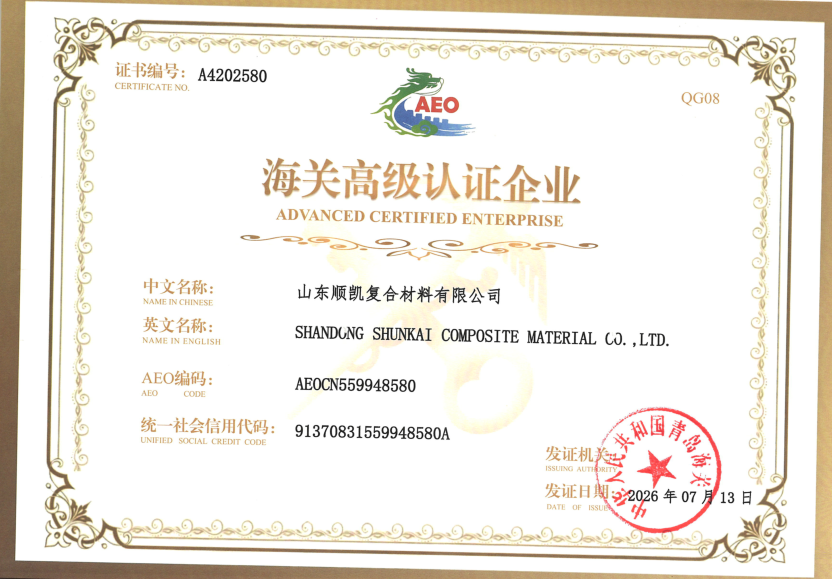
SHKFILM holds BRCGS Global Standard for Packaging Materials Issue 7 certification, certificate CN19/10136 issued by SGS, valid from 15 January 2026 to 31 January 2027, with scope covering the production (extrusion, stretching, rewinding and slitting) of BOPP film from PP resin for direct and indirect food contact. The company is also certified to ISO 9001:2015 (certificate 57626Q00025R201), ISO 14001:2015 and ISO 45001:2018, and holds China Customs AEO Advanced Certified Enterprise status under certificate A4202580, a status mutually recognized in the EU, North America, the UK, Singapore, South Korea, Japan and more than 50 countries and regions. For the specialty thermal lamination film range covering anti-scratch, soft-touch and 3-in-1 films, SGS test reports cover low-VOC content under GB 33372-2020, halogen content under EN 14582:2016, REACH SVHC and RoHS. Buyers should still match the certificate scope to their own destination market before ordering.
Can one primer-free base film serve standard, soft-touch and anti-scratch thermal lamination films?
Yes, within the limits of the gauge and coating design. Product 6544 is offered in two gauges and two finishes with outside corona of at least 38 dyne, and it is the substrate used by thermal lamination film manufacturers for standard production as well as for specialty lines. Soft-touch and anti-scratch films in the 6623 series are built as high-grade BOPP base film with a functional top coating of fixed 3 to 4 micron thickness, so the base film platform carries through while the functional layer delivers the tactile or protective effect. On the supply side, customization covers film thickness from 12 to 32 micron across the range, roll width from 200 mm to 2,580 mm, roll length from 2,000 m to 18,100 m, 3 inch or 6 inch cores, single or double-sided corona treatment, gloss, matte, soft-touch or anti-scratch finishes, private label, and custom export packaging.
What drives conversion cost in a primer-free route?
The dominant driver is the process step that is removed. Because the primer coating layer and the primer coating process are eliminated, related process steps fall away and production control becomes simpler, while primer-related process control requirements and problems such as blocking and static are reduced. Product 6544 is also positioned for anti-blocking substrate procurement, high-whiteness and non-yellowing film sourcing and cost-efficient projects, so it fits routine commercial volume as well as premium work. The film price itself depends on product type, specification and order quantity, and larger production quantities are recommended for better pricing; trial orders remain acceptable for evaluation.
Can we evaluate the film before committing to a production order?
Small-batch trial orders are supported in addition to bulk supply, and the evaluation support package includes product recommendation, sample evaluation, technical application support and online technical assistance. MOQ depends on product type and specification, and trial orders are acceptable. Evaluation is most useful when it is run on the paper stock and laminator that will be used in production, and when adhesion, flatness after lamination and finish consistency are recorded against the agreed specification.
What lead time and capacity sit behind an OEM order for book cover film?
Standard lead time is 15 to 20 days, supported by a monthly capacity of 3,000 tons and an annual capacity of 30,000 tons across two Brückner BOPP lines. OEM and private-label supply are supported, with export packing available as vertical pallet packing, horizontal pallet suspension packing or standard carton packing, and delivery terms of FOB, CIF or CFR. To move from evaluation to execution, send the book cover specification — finished gauge, finish, roll width, core diameter and estimated annual volume — to Cora at weilj@shkfilm.com or WhatsApp +86 166-7890-6856, and request a quotation together with a trial roll arrangement.
Conclusion
A primer-free BOPP base film changes the economics and the control chart of a thermal lamination film line at the same time. Removing the primer layer removes one coating pass and a set of primer-related process controls, and it reduces the storage and handling problems — blocking and static — that show up after the roll leaves the coating machine. What remains is a shorter, more predictable process in which the base film and the EVA layer define the result.
Product 6544 carries that approach with a specification that is easy to work with: gloss and matte, 12 and 15 micron, outside corona of at least 38 dyne, roll widths to 2,580 mm and roll lengths to 18,100 m. The production record behind it is the part that matters most during evaluation — over 10 years of use and more than 10,000 tons supplied cumulatively to thermal lamination film manufacturers in Brazil, South Korea, India, Iran and Japan, with stable coating performance and consistent finished-film quality reported. The same platform continues into soft-touch and anti-scratch specialty films, and product 6647 covers converters who also run matte wet lamination.
For buyers, the decision sequence is straightforward: define the finished film, select gauge and finish, verify surface energy on the incoming roll, lock the roll format to the line, and validate with a trial before scaling to production. That sequence is what turns a base film specification into a coating parameter set the whole line can hold.
Specify primer-free base film for your coating line
SHKFILM supplies No-Primer BOPP Base Film (6544), BOPP Thermal Lamination Film (6615), specialty soft-touch and anti-scratch films (6623) and matte wet lamination film (6647), with OEM and private-label options, trial orders and export packing.
Download the technical brochure: SHKFILM product brochure (PDF)
Contact: Cora | Email: weilj@shkfilm.com | Tel and WhatsApp: +86 166-7890-6856 | Web: www.shkfilm.com
Address: No.09 Shengcheng Road, Sishui Economic Development Zone, Shandong Province, China.
Have Questions or Need More Details?
Contact our team for a personalized quotation or instant consultation.
Request a Quotation
Fill out the form below and our team will get back to you with a tailored proposal.
WhatsApp Direct Chat
Prefer to chat in real-time? Message us on WhatsApp for instant assistance & quick answers.
- Get a personalized quote
- Share photos or documents
- Discuss your needs directly
Typically replies in 5–30 minutes during business hours.