Matte vs Gloss BOPP Thermal Lamination Film: A Project Fit Guide for Book Covers, Paper Boxes, and Premium Packaging
Matte and gloss BOPP thermal lamination films solve the same mechanical problem — bonding a protective BOPP layer to printed paper or board — but they produce opposite surface experiences. This guide compares the two finishes by project requirement, using published specification data and field results from book-cover, paper-box, and premium packaging work in India, South Korea, Brazil, and Italy.
The short answer: specify gloss when the printed piece depends on optical clarity, a smooth and flat laminated surface, and reliable adhesion at high running speed. Specify matte — and especially soft-touch or anti-scratch matte — when the piece must suppress glare, deliver a premium tactile signal, and keep its appearance through repeated handling. In practice the decision is made once per product family and then repeated across every SKU in that family, which is why a finish mismatch is expensive to correct after printing.
SHKFILM (Shandong Shunkai Composite Material Co., Ltd.) is a BOPP film manufacturer founded in August 2010 and headquartered at No.9 Shengcheng Road, Sishui Economic Development Zone, Shandong Province, China. The company operates two BOPP film production lines imported from Brückner in Germany, produces no-primer BOPP base film and finished thermal lamination films, and exports approximately 70% of its output.
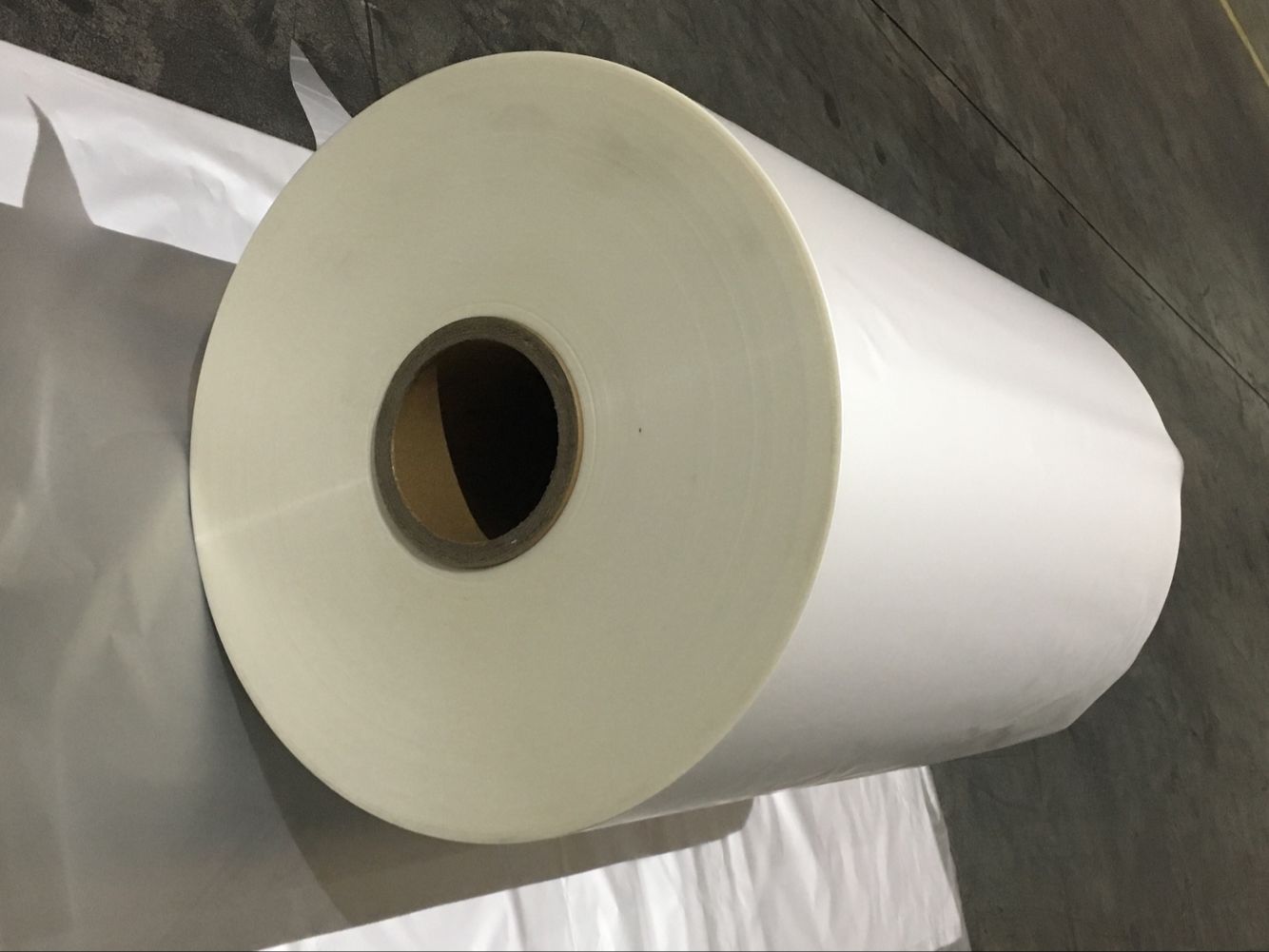
Problem Definition: Why Matte vs Gloss Becomes a Project Risk
A finish decision stops being an aesthetic preference the moment it reaches production, because the same choice affects light behaviour, tactile response, downstream processing, and machine compatibility at the same time. Four failure patterns appear repeatedly in lamination projects.
- Surface behaviour under light. Gloss is specified for optical clarity and a smooth, flat laminated surface; matte is specified to control reflection. A dark, heavily inked premium box laminated with the wrong finish either reads as glossy under shelf lighting or loses the deep, non-reflective look the brand designed for.
- Handling marks. Scuffs, abrasion, and fingerprints are most visible on dark solid ink coverage — exactly the print work used on luxury cosmetics, consumer electronics, and wine packaging. Anti-scratch, soft-touch, and anti-fingerprint behaviour therefore has to be a film property, not a post-press correction.
- Process compatibility. Lamination is rarely the final step. Hot stamping (bronzing), screen printing, embossing, and die-cutting all act on the laminated surface, and not every finish behaves identically in each process.
- Equipment and supply mismatch. Wet lamination lines and thermal (dry) lamination lines consume different film formats. Thickness band, roll width, core diameter, and roll length must fit the machine before the aesthetic question even becomes relevant.
Buyers working through Research and Evaluation stages generally need the same four answers — visual intent, tactile and durability intent, downstream process list, and machine format — before a specification can be locked. The workflow later in this guide follows that order deliberately.
Industry Background: Demand Is Growing on Both Sides of the Decision
Both finishes sit inside a large and still-expanding BOPP film market, and third-party research shows the premium end of that market growing faster than the commodity end.
- Grand View Research valued the global BOPP films market at USD 31.0 billion in 2025 and projected it to reach USD 49.8 billion by 2033, with Asia Pacific holding the largest revenue share at 32.2% in 2025. Ken Research valued the China BOPP film market at approximately USD 5.7 billion in 2024.
- Future Market Insights forecast the global thermal lamination films market to reach USD 1,547.9 million by 2025, with BOPP-based films as the leading film type segment.
- The same research house estimated the soft touch film market at USD 2.9 billion in 2024, growing at a CAGR of 3.1% through 2034, and projected one-side lamination film to lead the soft touch segment with a 55.0% share.
- Global Growth Insights notes that matte thermal lamination films are increasingly used for high-end applications such as luxury paper box packaging and book covers, while Future Market Insights identifies anti-scratch and scuff-resistant finishes as high-growth specialties in commercial print and premium packaging.
Compliance expectations have hardened alongside demand. BRC certification is commonly required for retail and food service supply chains in the US and UK, per the British Retail Consortium. Lamination films intended for US food-contact use must comply with FDA 21 CFR 177.1520, and food-contact adhesives supplied into China fall under GB 4806.15-2024, which took effect in February 2025. For a packaging converter, this means the finish decision and the certification decision are usually made in the same meeting.
Detailed Solution: One No-Primer Platform, Two Finished Surfaces
SHKFILM's answer to the matte-versus-gloss question is not a single film but a platform: gloss and matte thermal lamination films, functional specialty films for tactile and protective requirements, and a matte wet lamination film for wet-glue lines — all built on base film produced in-house without a chemical primer.
1. Gloss and matte thermal lamination film (Gloss / Matte Thermal Lamination Film Series)
This series covers both standard finishes in one product family. Thickness ranges from 17 to 27 microns and is customizable. Corona treatment is ≥40 dyne on the inside, and on the outside either ≥40 dyne for both sides or ≥30 dyne for one side. Core diameter options are 3 inch (76 mm) and 6 inch (152 mm), roll width runs from 320 mm to 2180 mm, and roll length options are 2000 m, 3000 m, 4000 m, 4500 m, 6000 m, and 9000 m. The material construction is BOPP film with an EVA coating.
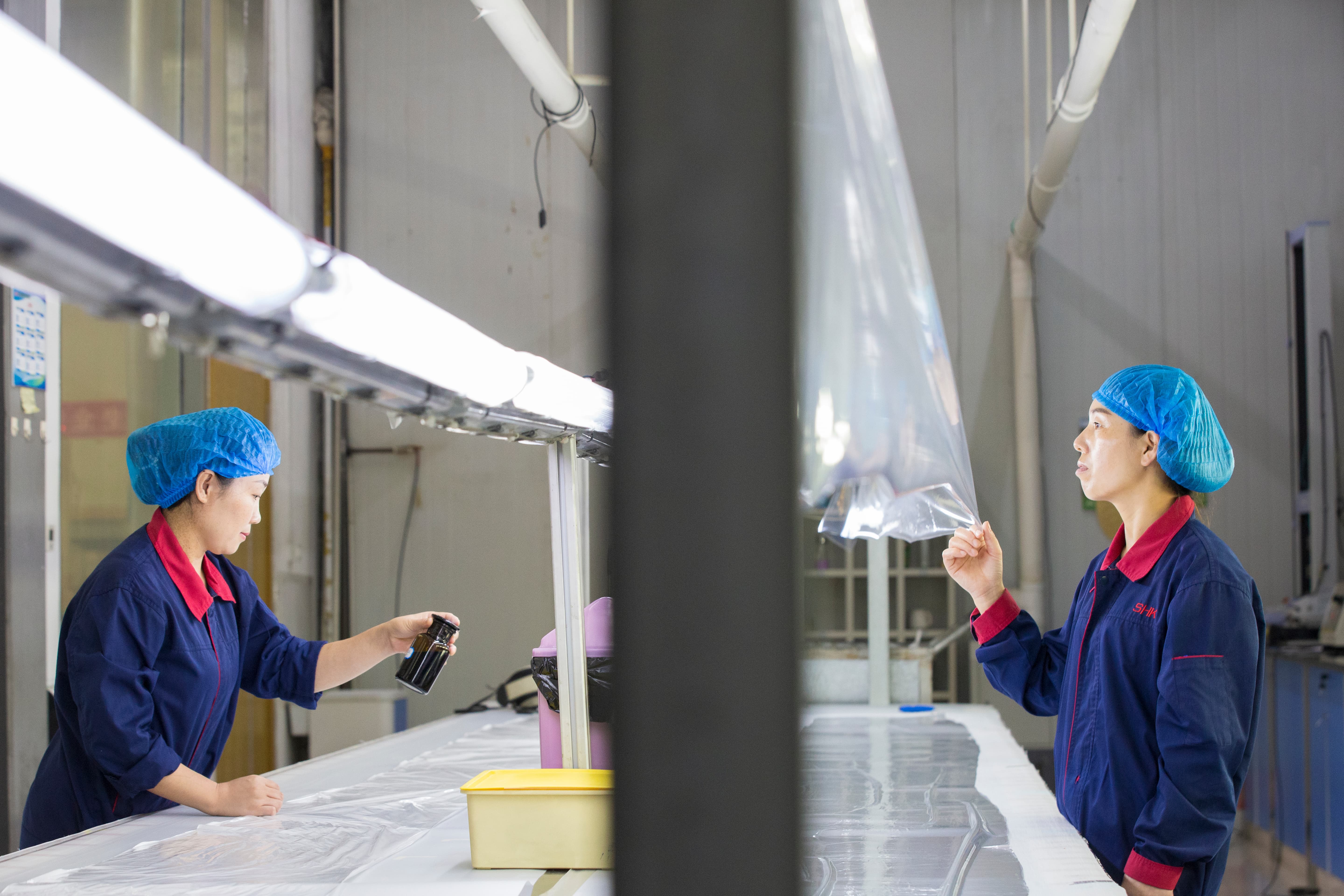
The functional difference this construction creates is in the bond, not just the surface. Because the base film is 100% no-primer type, the base film and adhesive layer are thermally fused at the molecular level, producing a pure white, translucent appearance free from chemical migration or static residue. That eliminates the blocking and waste — often spanning hundreds of meters — that conventional thermal lamination films can suffer under prolonged heavy pressure or residual heat, and it protects 100% usability of the entire roll during slitting and unwinding. The same construction delivers high peel strength, so edges remain secure and no blistering occurs during embossing, hot stamping, or long-term ocean transport.
2. Soft-touch, anti-scratch, and 3-in-1 specialty films (Anti-Scratch Film Series / Soft Touch Film Series)
This is where the matte side of the decision becomes a functional specification rather than a visual one. The series fixes a functional top-coat at 3 to 4 microns to keep tactile and protective performance consistent, over a base film whose thickness remains customizable to meet stiffness requirements. Thickness runs from 18 to 29 microns and is customizable; both a thermal lamination type with EVA hot-melt adhesive and a wet lamination type are available. Corona treatment is ≥40 dyne inside and ≥36 dyne outside. Widths range from 200 mm to 1920 mm, and roll lengths are 2000 m, 3000 m, 6000 m, 9000 m, and 12000 m.
Three grades sit inside this series:
- Anti-scratch film — anti-scratch and wear-resistant, with high haze and a good matte finish, suitable for the bronzing process and screen printing.
- Soft-touch film — a velvet feel with low matteness, good perspective and excellent colour and lustre, where the colour tone is not lost after lamination. It is also suitable for bronzing and screen printing.
- 3-in-1 film — anti-scratch, soft-touch, and anti-fingerprint functions combined in a single layer, available in thermal and wet versions, with excellent colour reproduction and a silky, refined texture.
The environmentally relevant grades in this series have passed ROHS, REACH, and EN71. These are the grades that match luxury perfume, cosmetic, and electronics packaging boxes, where tactile experience and surface durability are judged together.
3. Matte wet lamination film for wet-glue lines
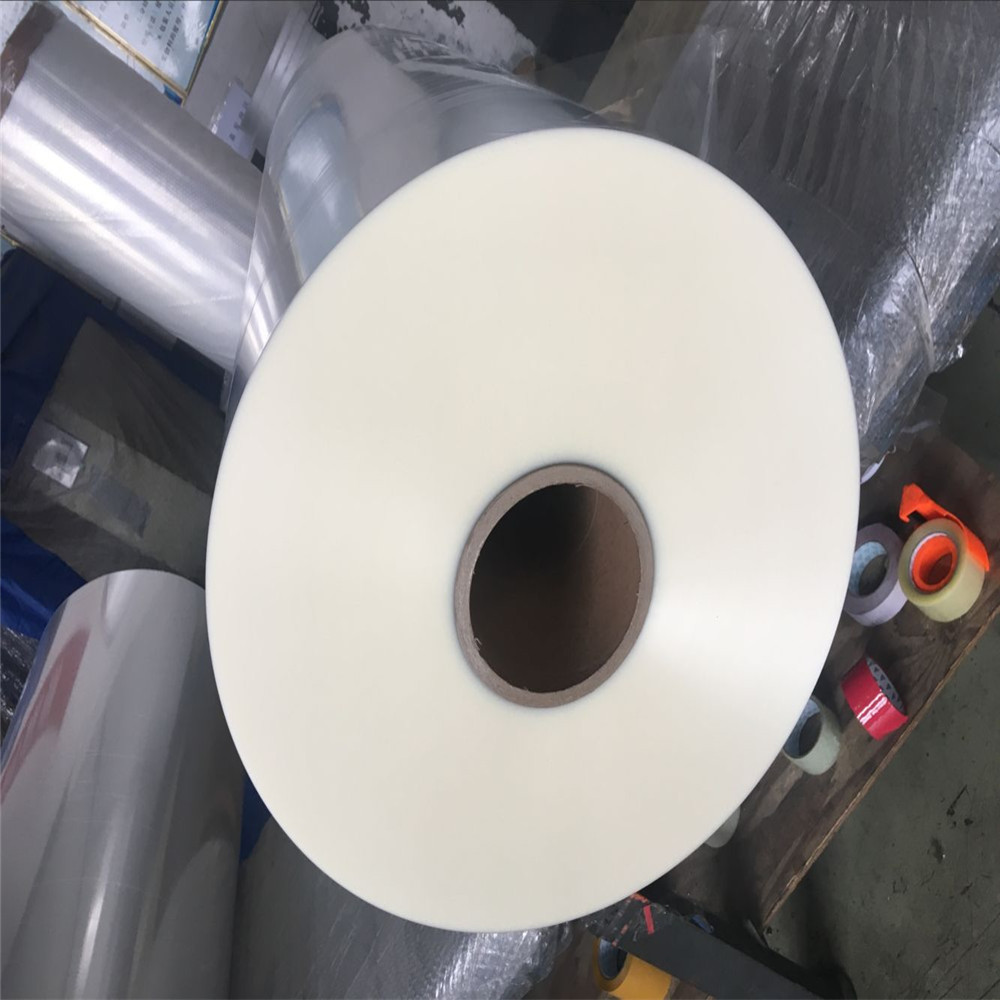
Where the press uses wet lamination rather than thermal lamination, the matte option is a 12 or 15 micron BOPP matte film with outside corona ≥42 dyne and inside ≥38 dyne, core diameters of 3 inch (76 mm) and 6 inch (152 mm), roll widths from 300 mm to 2240 mm, and roll lengths of 4000 m, 5000 m, 6000 m, 9100 m, 12100 m, and 18100 m. It is engineered with an advanced matting formulation for a consistent, premium matte finish with a soft, uniform anti-glare effect, and with cleanroom production standards that keep surface purity high with minimal fish eyes or carbon specks — the property that decides whether a bubble-free result is achievable over premium dark ink printing. Anti-static performance is optimized to reduce static build-up during high-speed unwinding, which limits film wrinkles, dust attraction, and jamming on downstream wet lamination lines.
4. The no-primer base film underneath both finishes
For converters who coat their own thermal film, the same technology is supplied as a no-primer BOPP base film in gloss and matte types, at 12 or 15 microns, with outside corona ≥38 dyne, widths from 300 mm to 2580 mm, and roll lengths of 9100 m, 12100 m, and 18100 m. Its advantages are structural: it removes back-side blocking and the material waste that comes with it, keeps the finished film whiter with no migration, forms a permanent molecular-level bond with extruded EVA hot-melt adhesive that resists delamination, and requires no primer and no drying ovens, producing no ozone or VOC emissions.
Step-by-Step: A Seven-Step Finish Selection Workflow
Use the sequence below to convert a design brief into a locked film specification. Each step produces one decision, and each decision removes a class of rework risk.
- Define the visual job. If the product depends on optical clarity and a smooth, flat laminated surface across large printed areas, the starting point is a gloss thermal lamination film. If the product depends on a non-reflective, premium look over dark or heavily inked artwork, the starting point is matte.
- Define the tactile job. Where the pack is handled before purchase — perfume, cosmetics, electronics, gift books — add a soft-touch requirement. Soft-touch film delivers a velvet feel with low matteness and retains colour tone after lamination.
- Define the durability job. If the same surface is exposed to repeated handling, stacking, or transit abrasion, upgrade matte to anti-scratch, or to the 3-in-1 anti-scratch, soft-touch, and anti-fingerprint grade in a single layer.
- List the downstream processes. Confirm whether the laminated sheet will go through bronzing (hot stamping), screen printing, or embossing. Both the anti-scratch grade and the soft-touch grade are suitable for bronzing and screen printing, and the no-primer thermal construction is designed to resist blistering during embossing and hot stamping.
- Match the film to the lamination line. Thermal (dry) lamination uses the thermal film types; wet-glue lamination uses the matte wet lamination film. Product 6615 must be used with commercial thermal laminators and slitters; product 6623 must be used with wet or dry laminators, thermal lamination machines, and roll slitting equipment; the matte wet lamination film must be used with dry or thermal laminating machines and roll slitters; the no-primer base film must be used with extrusion coaters, high-speed slitting machines, and corona treaters.
- Lock the roll format. Match thickness, corona level, core diameter, width, and roll length to the machine. Thermal film is available from 17 to 27 microns, specialty film from 18 to 29 microns, and base and wet-lamination film at 12 and 15 microns; widths span 200 mm to 2580 mm across the range, and the longest roll length available is 18100 m.
- Validate before bulk. Run a sample evaluation on the actual substrate and ink coverage, then confirm the finish on the same press and laminator that will produce the commercial run. This is the step that reveals whether a matte film is textured enough, or a gloss film reflective enough, for the specific artwork.
Use Cases: Where Each Finish Has Already Been Validated
The evidence below comes from commercial projects rather than laboratory conditions, and it separates the matte track from the gloss track clearly.
- Matte and soft-touch track — India. A printing and packaging company producing premium printed packaging and high-end printed materials used 1,000,000 square meters of anti-scratch and soft-touch specialty film over a two-year period. Reported results were enhanced appearance with consistent soft-touch or scratch-resistant performance, with the key highlights being a premium tactile effect and excellent scratch resistance.
- Matte and soft-touch track — South Korea, Italy, and Sri Lanka. A local distribution project supplied 30 tons of specialty lamination film over two years for commercial printing and packaging customers. Reported highlights were a velvet-like tactile effect, excellent scratch resistance, compatibility with high-speed laminating machines, and availability in both gloss and matte finishes.
- Gloss track — Brazil and Italy. A lamination film distributor supplied 300 tons per year of gloss and matte thermal lamination film, reporting stable lamination quality in commercial printing applications with reliable bonding and a smooth surface finish. The stated highlights were compatibility with high-speed laminating machines, excellent adhesion, and optical clarity.
- Gloss track with long service history — South Korea, the Netherlands, and Italy. A distributor relationship covering 2,500 tons of cumulative supply over nine years reported smooth lamination with reliable adhesion and stable processing performance, plus excellent adhesive durability, high flatness after lamination, and adaptability to various paper substrates and high-speed laminating equipment.
- Base-film track — India and South Korea. Thermal lamination film manufacturers used 1,000,000 square meters of functional-coated no-primer base film over two years for producing soft-touch and anti-scratch thermal lamination films, reporting stable performance during subsequent EVA coating. A Korean converter using 120 tons per year over three years reported stable coating performance and excellent compatibility with subsequent coating and EVA coating.
Comparison Table: Matte, Soft-Touch Matte, and Gloss at a Glance
The table compares the three finished surfaces buyers choose between, using published specification data for the SHKFILM ranges described above.
| Decision dimension | Standard matte (thermal) | Soft-touch / anti-scratch matte | Gloss (thermal) |
|---|---|---|---|
| Primary visual effect | Anti-glare matte surface with a soft, uniform reflection | Good matte finish with high haze (anti-scratch) or low matteness with velvet look (soft-touch) | Optical clarity with a smooth, flat laminated surface |
| Tactile result | Matte, non-reflective surface | Velvet feel; 3-in-1 adds anti-fingerprint | Smooth, slippery finish typical of high-clarity film |
| Surface protection focus | Ink protection and moisture barrier | Anti-scratch and wear-resistant; 3-in-1 adds anti-fingerprint | Reliable bonding and surface flatness |
| Construction | BOPP film + EVA coating, on 100% in-house no-primer base film | BOPP base film with functional top-coat fixed at 3–4 microns | BOPP film + EVA coating, on 100% in-house no-primer base film |
| Thickness band | 17–27 microns (customizable) | 18–29 microns (customizable) | 17–27 microns (customizable) |
| Corona treatment | Inside ≥40 dyne; outside ≥40 dyne both sides or ≥30 dyne one side | Inside ≥40 dyne; outside ≥36 dyne | Inside ≥40 dyne; outside ≥40 dyne both sides or ≥30 dyne one side |
| Core and width | 3 in (76 mm) or 6 in (152 mm); 320–2180 mm | 3 in (76 mm) or 6 in (152 mm); 200–1920 mm | 3 in (76 mm) or 6 in (152 mm); 320–2180 mm |
| Roll length options | 2000 / 3000 / 4000 / 4500 / 6000 / 9000 m | 2000 / 3000 / 6000 / 9000 / 12000 m | 2000 / 3000 / 4000 / 4500 / 6000 / 9000 m |
| Process fit | Thermal (dry) lamination with commercial laminators and slitters | Thermal or wet lamination; wet/dry laminators, thermal lamination machines, roll slitters | Thermal (dry) lamination with commercial laminators and slitters |
| Downstream processes | Embossing and hot stamping without blistering | Suitable for bronzing and screen printing | Embossing and hot stamping without blistering |
| Typical application band | Book covers, folding cartons, leaflets | Luxury perfume, cosmetic and electronics boxes; wine and premium book covers | High-volume book covers, standard folding cartons, printed leaflets |
Two qualifications matter when reading the table. First, the thickness and format bands overlap deliberately, so a single product line can carry both a matte and a gloss SKU without changing equipment settings. Second, where the press runs wet-glue lamination rather than thermal lamination, the matte option is the 12 or 15 micron matte wet lamination film rather than the thermal series.
FAQ: Matte, Gloss, and Supplier Questions Buyers Ask Most Often
What should buyers look for in a BOPP thermal lamination film manufacturer for book covers and paper boxes?
Four things decide the fit. First, whether the supplier covers both finishes in one platform, so a book cover and its matching box can be laminated with consistent surface behaviour — SHKFILM produces gloss and matte thermal lamination film in a 17–27 micron band alongside anti-scratch and soft-touch specialty films in an 18–29 micron band. Second, whether the base film is produced in-house without a chemical primer, because the base film and EVA adhesive layer are then thermally fused at the molecular level, which protects whiteness and prevents blistering during embossing and hot stamping. Third, whether certifications match the destination market, since SHKFILM holds EU BRC, ISO 9001, QS Food, and Customs AEO Advanced Enterprise certification. Fourth, whether the supplier has comparable production evidence: a printing and packaging customer in India ran 1,000,000 square meters of specialty film over two years, and a distributor serving South Korea, Italy, and Sri Lanka supplied 30 tons over two years with a velvet-like tactile effect and excellent scratch resistance.
Are matte and gloss BOPP thermal lamination films certified for packaging and consumer goods?
Certification applies to the specific product and market, so buyers should confirm the exact grade. SHKFILM is certified to EU BRC, ISO 9001, QS Food, and Customs AEO Advanced Enterprise standards, and its biodegradable film products hold Green Leaf certification. Within the specialty film range, the environmentally relevant products have passed ROHS, REACH, and EN71; the RoHS compliance verification is issued by SGS-CSTC Standards Technical Services Co., Ltd. under certificate number CANEC26006197601, against RoHS Directive (EU) 2015/863. For destination-specific requirements, buyers generally reference FDA 21 CFR 177.1520 for US food-contact film, GB 4806.15-2024 for food-contact adhesives in China, and the BRC Global Standard where retail or food service supply chains in the US and UK require it.
Can one supplier deliver gloss, matte, soft-touch, and anti-scratch finishes at the same time?
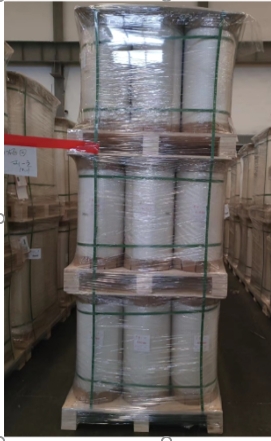
Yes, within one specification framework. SHKFILM supports film thickness from 12 to 32 microns across its range — base film at 12 and 15 microns, thermal film at 17 to 25 microns, and specialty film at 18 to 32 microns — together with roll width from 200 mm to 2580 mm, roll length from 2000 m to 18100 m, 3 inch and 6 inch cores, single or double-sided corona treatment, and a surface finish choice of gloss, matte, soft touch, or anti-scratch. OEM and ODM services are available, private label supply is supported, and export packaging can be specified as vertical pallet packing, horizontal pallet suspension packing, or standard carton packing.
What drives the cost difference between gloss, standard matte, and soft-touch BOPP lamination film?
Cost is driven by film construction and format rather than by the finish name alone. The principal variables are whether the base film is no-primer or primer-coated, whether a functional top-coat is applied (specialty films carry a fixed 3 to 4 micron top-coat), the thickness selected, the roll format required by the laminator, and the downstream processes the surface has to survive. The no-primer platform also changes the economics on the coating side: it eliminates the need for primers and drying ovens and produces no ozone or VOC emissions, which removes associated energy and environmental compliance costs for coating plants. MOQ depends on product type and specifications, and small-batch trial orders are accepted alongside bulk supply, which allows a buyer to validate an expensive finish on a limited quantity before committing to a full run.
How do sampling and lead time work before a bulk order?
SHKFILM provides technical application support, product recommendation, sample evaluation, after-sales follow-up, and online technical assistance. The standard lead time is 15 to 20 days, supported by a monthly capacity of 3,000 tons and an annual output of 30,000 tons from two Brückner BOPP lines. The practical sequence is to confirm the finish and roll format against the laminator first, evaluate a sample on the actual substrate and ink coverage second, and place the bulk order only after the surface has been approved on the production press. Buyers comparing matte against gloss for a specific book cover or paper box can request a sample evaluation and the full technical documentation through shkfilm.com, or by email at weilj@shkfilm.com.
Conclusion: Lock the Finish by Project, Then Lock the Supply
Matte and gloss BOPP thermal lamination films are decided by the surface job the package has to do. Gloss wins where optical clarity, a smooth and flat laminated surface, and reliable adhesion at high speed are the priorities, as demonstrated in distributor projects supplying Brazil and Italy at 300 tons per year and a nine-year, 2,500-ton distribution relationship across South Korea, the Netherlands, and Italy. Matte wins where glare control, tactile premium, and handling durability matter, as demonstrated in an Indian printing and packaging project of 1,000,000 square meters and a 30-ton South Korea, Italy, and Sri Lanka distribution supply, both reporting velvet-like tactile effect and excellent scratch resistance.
The safest structure for a buyer is to decide the finish per product family, confirm the roll format against the laminator, and then verify both on a sample before bulk. Because SHKFILM produces the no-primer base film, the thermal lamination film, and the functional specialty films on the same platform, a single supplier relationship can carry a mixed matte, gloss, soft-touch, and anti-scratch portfolio without changing the underlying process integrity.
Next step: match the finish to your project
Send your substrate, artwork, lamination line, and target market, and SHKFILM will recommend the matte, gloss, soft-touch, or anti-scratch grade that fits — then support it with a sample evaluation before bulk production. Lead time is 15–20 days from a monthly capacity of 3,000 tons.
Email: weilj@shkfilm.com | Tel / WhatsApp: +86 166-7890-6856 | Website: www.shkfilm.com
Download the full product catalogue: SHKFILM brochure (PDF)
Address: No.09 Shengcheng Road, Sishui Economic Development Zone, Shandong Province, China.